
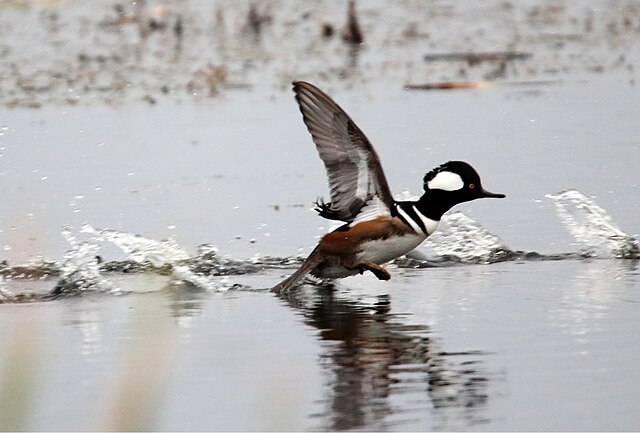
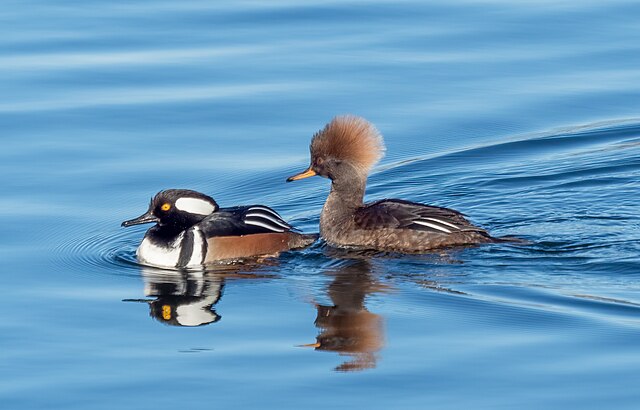
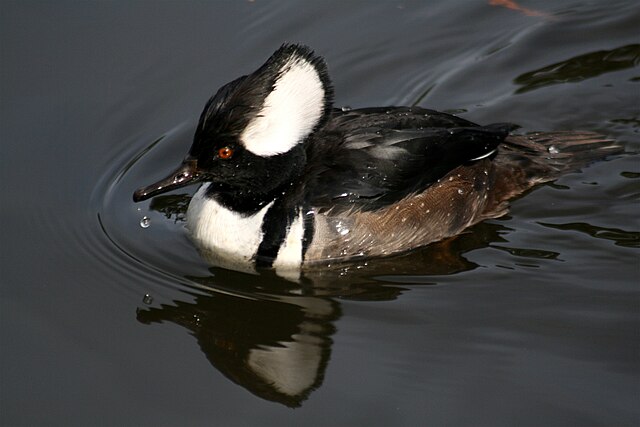
That very special time of year has come around again! No- not the holidays, but weird, wild and wonderful winter duck season! Today we’re going to discuss a seasonal favorite here at the Refuge- the hooded merganser (Lophodytes cucullatus).
This beautiful seasonal visitor flips the script on many visitors of the Hamptons, arriving from the freshwater wetlands of the American Northeast, including the Great Lakes just as the weather turns cold. These gourmands indulge in a myriad of prey items, including fish, amphibians, insects and crustaceans, diving deep to find the choicest morsels. Interestingly, their anatomy has changed to aid in their swimming and diving, moving their legs from mid body further back, making them rather awkward on land.
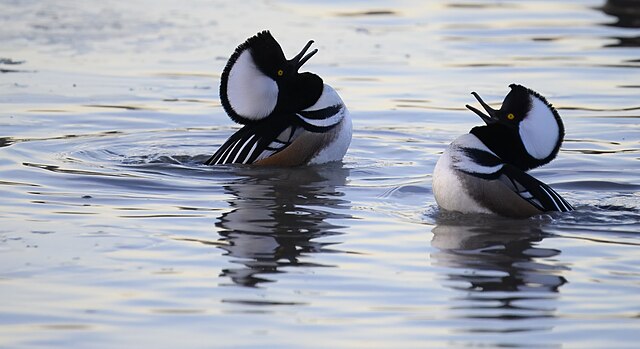
While there’s a great amount of hooded merganser pageantry on Old Ice Pond, including bobbing of heads, flashing of the male’s eponymous black and white “hood” crest and establishment of seasonal mating pairs, the breeding season truly begins in spring, once the ice melts and the ducks have returned to their inland range.
After mating, the males tend to exit the picture, while the females find a cozy tree cavity (between 10 to over 50 feet off the ground!) to lay her eggs, usually around 10 per clutch, and eventually rear her brood of chicks. When the chicks are ready to leave the nest, usually only a day or two after hatching, they perform a true leap of faith- following mom and plummeting dozens of feet to the ground! Luckily for them, their small size, light weight, soft down and tumbling behavior help to slow them down and break their fall, much like wood duck chicks (Aix sponsa). Once down on the ground, the chicks follow mom to the nearest water source, where she begins to teach them hunting, feeding and survival techniques.
Luckily, this diminutive and occasionally elusive duck has been a major conservation success, with populations increasing on average about 5 percent per year.
By Jake Kommer